The pharmaceutical industry is undergoing a fundamental shift. As healthcare markets become increasingly global, regulatory expectations grow more stringent and innovation moves from conventional formulations towards differentiated, patient-centric drug delivery, the business of pharmaceuticals is no longer driven by scientific capability alone. Companies must simultaneously navigate complex regulatory pathways, significant investments in research and development, changing market dynamics and the demands of operating across diverse geographies. In this environment, financial leadership has evolved from managing balance sheets and controlling costs to becoming an integral part of strategic decision-making.
For pharmaceutical enterprises pursuing sustainable global growth, the ability to allocate capital intelligently, build resilience, strengthen governance and create room for innovation can be as consequential as the products themselves. The challenge lies in maintaining financial discipline without slowing the very innovation that creates long-term competitive advantage.
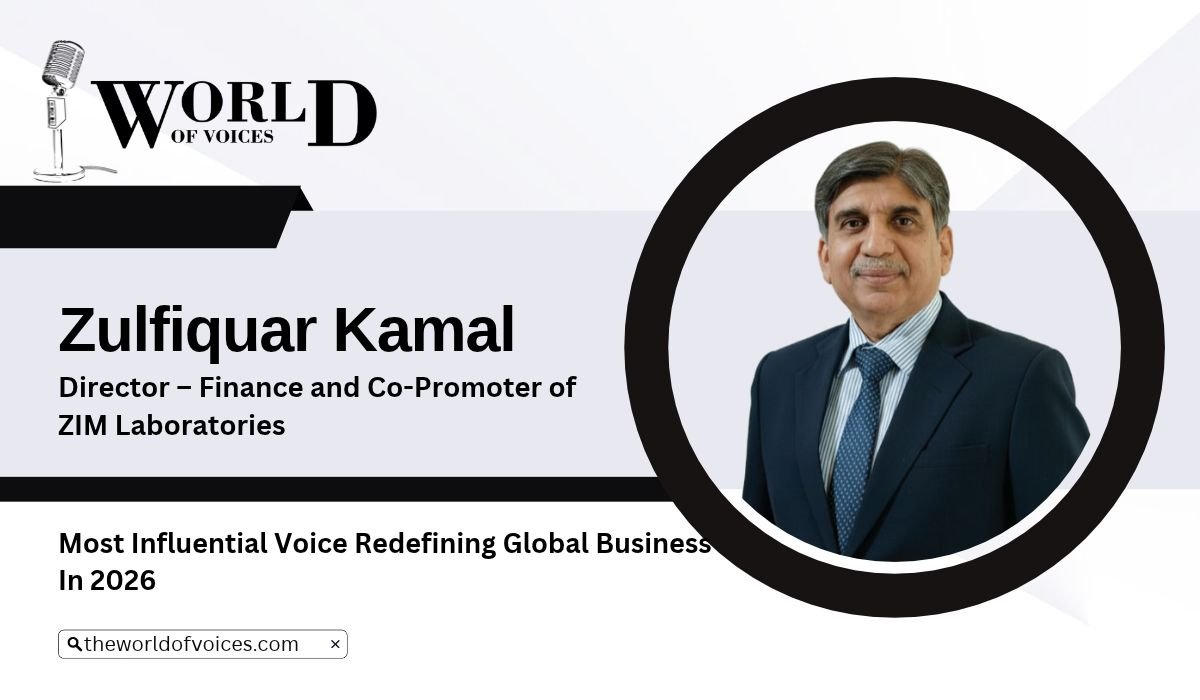
Few careers offer a closer view of this evolution than that of Zulfiquar Kamal, Director – Finance and Co-Promoter of ZIM Laboratories.has been associated with ZIM Laboratories for over 35 years, Having joined the organisation in 1989, Kamal has spent these more than three decades at the intersection of finance, strategy and business transformation, witnessing ZIM evolve from a home-grown enterprise into an organisation with a presence across more than 50 countries. His journey has encompassed the strengthening of financial governance, the company’s transition to the public markets, investments in innovation and differentiated products, and the pursuit of opportunities across regulated international markets.
For Kamal, however, finance has never been simply about numbers. It is about creating the stability and strategic freedom required for a business to innovate, adapt and grow. His philosophy reflects a conviction that financial discipline and transformative growth are not competing priorities, but complementary forces—and that when supported by strong governance, the former can become an enabler of the latter.
A Journey Shaped by ZIM
In an industry where pharmaceutical businesses must constantly balance scientific ambition with commercial realities, the leaders who understand both sides often become the quiet architects of sustainable growth. For Zulfiquar Kamal, that understanding has been shaped not in theory, but through more than three decades of being part of ZIM Laboratories’ evolution.
His interest in finance began much earlier. Growing up in a business family in the 1970s, Kamal watched his father build his commercial successful business through hard work and perseverance. “That early exposure taught me the value of discipline, determination, and building relationships that last,” he recalls. He went on to complete his articleship with accounting firm Loya Bagri & Company, gaining the technical foundation that would later underpin his career as a Chartered Accountant.
But it was his move into pharmaceuticals that would define his professional journey. In 1989, Kamal joined ZIM Laboratories alongside Dr. Anwar Daud. What began as a professional decision became a decades-long association with an organisation that would itself undergo remarkable transformation.
“When I started working in ZIM, it was a home-grown enterprise with limited resources and an ambitious mission,” he says, reflecting on the journey. That mission—to make quality healthcare more accessible through patient-centric drug delivery solutions—has remained central to his association with the company.
Beyond this, Kamal has played a hands-on role in strengthening ZIM’s operational foundations. He led the implementation of an EU GMP-compliant ERP system that integrates Quality, Finance and Inventory functions, and drove IT automation across the company, including the digitalisation of records and the introduction of Testo for real-time environmental monitoring. Together, these systems have moved critical processes away from manual handling, making operations more accurate, traceable and audit-ready, while enhanced data security measures keep that information protected.
Over the years, Kamal has witnessed ZIM progress from its regional beginnings to an organisation operating across more than 50 countries, while developing capabilities in differentiated products and proprietary drug-delivery technologies. For him, however, the journey has offered lessons that extend beyond balance sheets and business milestones. “Numbers alone don’t build an organization; judgement, patience, and the willingness to keep learning do.”
Finance as a Force for Innovation
In pharmaceutical manufacturing, innovation comes with a demanding financial equation. Developing next-generation molecules, investing in specialised facilities and meeting increasingly stringent regulatory standards require significant capital, often long before commercial returns begin to materialise. For a finance leader, the challenge is therefore not simply to control expenditure, but to ensure that capital is deployed in ways that create sustainable competitive advantage.
At ZIM Laboratories, Kamal has approached this equation by treating financial discipline as a foundation for innovation rather than a constraint on it. “The financial challenges are closely tied to our R&D-driven model,” he explains, pointing to the substantial investments required to develop first- or second-to-market generics and upgrade facilities to meet global regulatory requirements.
His approach has centred on risk mitigation, strategic cost controls and disciplined financial management, creating the stability necessary for ZIM to pursue innovation with greater agility. Over time, this philosophy has also influenced the company’s business priorities. “We’ve deliberately reduced our reliance on low-margin government contracts and exports, redirecting resources instead toward high-margin, differentiated products built on our proprietary technologies.”
For Kamal, the distinction is important. Financial governance should not be viewed as a mechanism that slows ambition; it should provide the structure that allows ambition to endure. “Financial governance, done well, doesn’t restrain innovation. It’s what makes sustained innovation possible.”
That philosophy also reflects his broader leadership style, which combines financial discipline with communication, collaboration and empowerment. He believes teams perform best when they understand how their individual responsibilities connect to the larger strategy. Continuous learning, meanwhile, remains essential to keeping ZIM competitive as its differentiated generics and novel drug-delivery portfolio evolves.
From Family Enterprise to Public Institution
For Zulfiquar Kamal, one of the most defining chapters of his career came when ZIM Laboratories made the transition from a family-rooted enterprise to a publicly listed company. The decision to list on the BSE in 2018, followed subsequently by the NSE in 2022, brought with it a fundamentally different level of accountability. A business that had once been guided largely by the instincts and conviction of its founders now had to operate under the constant scrutiny of shareholders, regulators and the wider market.
“Taking ZIM Laboratories public was, without question, one of the defining moments of my career,” Kamal reflects. The transition required more than meeting listing requirements; it demanded a cultural and structural shift across the organisation. Strengthening internal financial controls, establishing formal investor-relations processes and embedding transparency into everyday decision-making became critical priorities.
For Kamal, the experience fundamentally reshaped his understanding of corporate governance. The public markets brought a new discipline to decision-making, where strategies and financial choices needed to withstand quarterly disclosures, regulatory frameworks and the expectations of institutional as well as retail investors. Yet he came to see this discipline not as a burden, but as an essential ingredient of sustainable growth.
“Corporate governance isn’t a compliance exercise; it’s the foundation of the trust that allows a company to raise capital, attract long-term investors, and sustain growth.”
The transformation also influenced his own leadership philosophy. He describes the shift as learning to balance “the founder’s instinct for speed and conviction” with the accountability demanded by public markets. In that balance lies a defining aspect of Kamal’s approach: preserving entrepreneurial ambition while building the governance structures needed to make that ambition sustainable.
Financing the Global Ambition
For a pharmaceutical company, entering a new market is rarely as simple as taking an established product across borders. Regulatory requirements, development timelines, market-entry strategies and capital commitments can vary significantly from one geography to another. For ZIM Laboratories, global expansion has increasingly been tied to a broader ambition: building an innovation-led portfolio capable of competing in some of the world’s most demanding markets.
At the centre of this ambition is ZIM’s New Innovative Products (NIP) pipeline, which Kamal sees as one of the organisation’s most significant opportunities for the future. These products, many positioned to be first- or second-to-market generics, combine commercial potential with the company’s focus on differentiated, patient-centric drug delivery.
“Our NIP pipeline is what excites me most,” Kamal says. The pipeline is already creating opportunities to expand into regulated markets including theEU, Brazil, Australia, Canada and South Africa, while attracting interest from partners and investors.
For Kamal, however, global growth is not simply about increasing the number of markets in which ZIM operates. Growing across borders also means operating within very different regulatory environments. ZIM has established subsidiaries in Europe, the UAE and Australia, each responsible for product registrations, marketing and distribution in its region. It is about making strategic choices about where the company directs its resources and how it builds sustainable value. The organisation’s shift away from greater reliance on low-margin government contracts towards higher-margin differentiated products reflects that thinking.
This approach has allowed finance to become closely intertwined with ZIM’s broader business strategy. Capital allocation, risk assessment and financial planning are considered alongside product development and market opportunities, rather than in isolation. The result is a model where financial prudence supports rather than limits ambition. ZIM’s international expansion has been anchored by a landmark partnership to establish a dedicated R&D centre in the UAE, in which Kamal played a pivotal role.
Kamal believes the larger opportunity extends beyond commercial success. “Patient-centric, innovation-led approaches to drug delivery can be commercially sustainable, not just scientifically interesting.”
Building Resilience for the Long Term
In pharmaceuticals, resilience is rarely built through quick reactions. Long development cycles, complex regulatory pathways and evolving market conditions require organisations to anticipate challenges well before they emerge. For Kamal, this makes preparation an essential part of financial and operational leadership, particularly when a company is simultaneously pursuing innovation and sustainable growth.
“Resilience comes from thorough preparation and stakeholder alignment before any major change, not from reacting after the fact.” His approach reflects a belief that financial leadership must look beyond immediate performance and consider the risks and opportunities that could shape the organisation over several years. At ZIM, this means using scenario planning, sensitivity analysis and capital budgeting to evaluate decisions against changing business conditions.
Such discipline becomes especially important in an R&D-driven pharmaceutical environment, where investments can take years to translate into commercial outcomes. Kamal therefore places equal emphasis on maintaining ZIM’s commitment to quality and compliance while pursuing growth. Rather than treating regulatory requirements as obstacles, he sees them as integral to building an organisation that can operate sustainably across markets.
Stakeholder trust is another important component of his approach. Investors, regulators and employees must have confidence that decisions are being made with transparency and integrity. “Organisations that treat governance as a constraint rather than a foundation rarely sustain growth for long,” he observes.
This philosophy extends resilience beyond financial safeguards. For Kamal, it is ultimately about creating an organisation capable of adapting without losing sight of its principles. Thorough preparation provides the framework; strong governance provides confidence; and alignment across stakeholders enables the business to move forward with clarity. In an increasingly competitive global pharmaceutical landscape, that combination allows ZIM to pursue growth while remaining grounded in operational excellence and long-term responsibility.
Building What Comes Next
The future of finance is becoming increasingly intertwined with technology. As artificial intelligence, automation and advanced analytics reshape how organisations interpret information and make decisions, finance leaders are being called upon to contribute far beyond traditional reporting and control. For Kamal, this evolution represents an opportunity to make finance more predictive, strategic and closely connected to the wider business.
“Finance leaders will increasingly be strategic partners, not just controllers of numbers.” He believes the next generation of finance professionals will need to combine financial expertise with technological fluency, business understanding and the ability to translate complex information into clear strategic choices. At ZIM, this thinking is already reflected in the organisation’s efforts to integrate technology across functions and strengthen data-driven decision-making.
Yet for Kamal, transformation ultimately has to serve a larger purpose. His vision for ZIM extends beyond financial performance towards building an organisation that can continue innovating responsibly while creating lasting value for its stakeholders. Sustainability forms an important part of that ambition, with the company working towards reducing its environmental footprint and progressing towards net-zero operations.
Kamal’s commitment to long-term value extends beyond ZIM. Through his association with the Global South Sustainability Foundation (GSSF) in Dubai, which is working towards a low-carbon, climate-resilient and equitable Global South, guided by strategic philanthropy. Here too, he brings the same discipline that has shaped his career, with an emphasis on sound financial governance, careful deployment of capital and durable institutions. It is a natural extension of a philosophy that treats finance as a means of creating lasting, shared value.
After more than three decades with ZIM, his perspective is naturally shaped by the long term. He does not view leadership simply through the milestones achieved during his tenure, but through the systems, capabilities and culture that can continue to create value after him.
“I want to be remembered as someone who helped build something that outlasted me.”
It is a fitting reflection of a career defined by building: strengthening financial foundations, supporting innovation, navigating transformation and helping an Indian pharmaceutical enterprise develop a global outlook. For Kamal, the most meaningful measure of leadership may ultimately be what remains when the leader steps away—a stronger organisation, a capable next generation and a legacy of responsible, sustainable growth.
Read Full Magazine Here: Most Influential Voice Redefining Global Business In 2026