“Creating meaningful work is only one part of building an artistic identity. Learning how to navigate the professional side of the art world is equally important.”
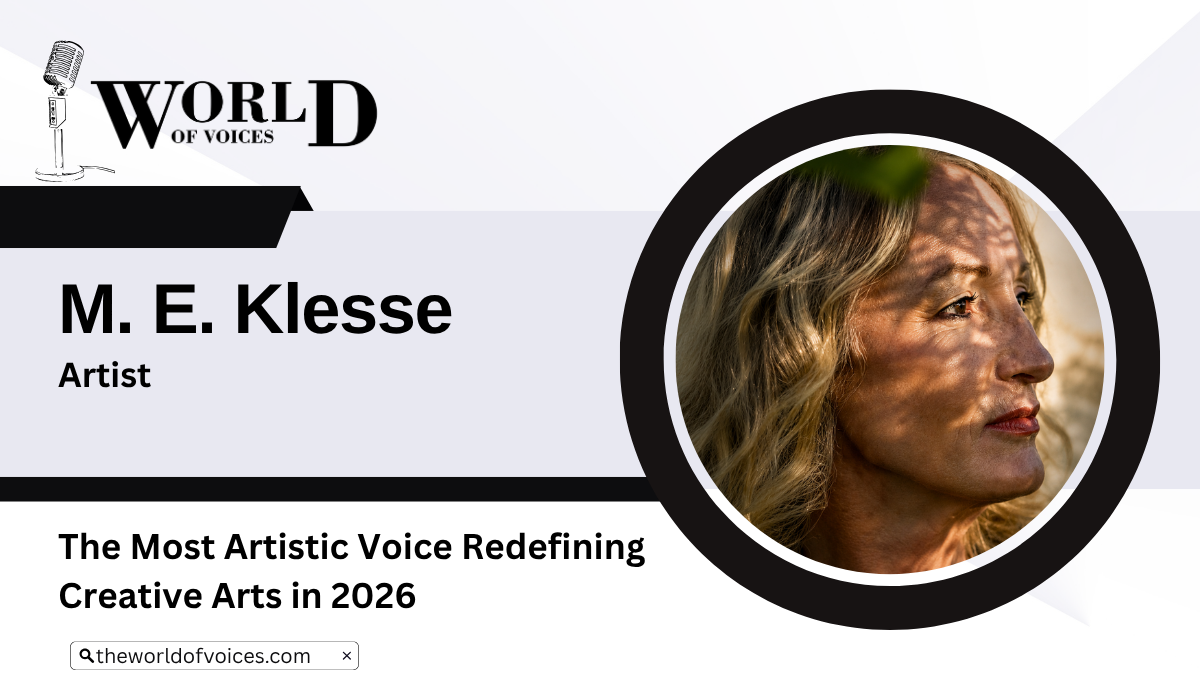
That’s M. E. Klesse talking. Not from a place of theory. From a place of having lived it. Of having lost a son. Of having picked up her hands again simply to survive. Of having learned the hard way that art isn’t just feeling. It’s also emails. Calendars. Deliveries. Discipline. That balance is what she wants you to understand before you read another word.
M. E. Klesse comes from a deeply artistic family of painters, musicians, and architects. So creativity was woven into her life from the beginning. The Clark Art Institute in western Massachusetts became her most important high school vacation destination, which she visited with her cousin. The Museum of Modern Art in Manhattan became her favorite visiting spot, which she explored with her best friend. M. E. Klesse says those experiences instilled in her a sense that art was not only beautiful but also an essential way of understanding the world and ourselves. She took a few art classes in high school. She spent her early adult years expressing her creative abilities through fashion design and household décor and children’s amusements. She worked on her creative projects with fashion design and household design and children’s entertainment for her artistic expression. Her son died. M. E. Klesse developed depression and anxiety, which a friend advised her to manage through creative work with her hands. The healing process started in its initial form before developing into something more substantial. She spent several years drawing and painting in every spare moment. Attending local workshops. Immersing herself in study. Then a geographic relocation caused a pause between jobs.
M. E. Klesse decided to devote several months entirely to her art practice to determine whether a full-time creative life was truly possible for her. That became the defining moment. Once she gave herself uninterrupted time to create, she realized that art was not simply something she loved. It was the language through which she processes experience, trauma, resilience, and transformation. What began as survival evolved into vocation. From that point forward, M. E. Klesse says pursuing art professionally no longer felt like a risk or an experiment. It felt inevitable.
The Clark, the City, and the Long Detour
She grew up surrounded by painters and musicians and architects. So creativity was never foreign. It was just… there. Like furniture. Klesse remembers high school breaks spent wandering through the Clark Art Institute in western Massachusetts with her cousin. Later, trips to the Museum of Modern Art in Manhattan with her best friend. Those spaces taught her something early: art wasn’t just pretty. It was a way of understanding. But for years, she kept fine art at a distance. She made clothes. She decorated rooms. She made things for kids. It was fine. It was lovely. And then it wasn’t enough. Or rather, life intervened in a way that made all of that feel like preparation for something she hadn’t seen coming.
What Grief Taught Her
Her son died. Klesse doesn’t dance around it when she talks. There’s no euphemism. Just the fact. During that period she called it “profound grief”; a friend pushed her toward working with her hands. Not to make great art. Just to survive. ” What began as a form of healing gradually became something much deeper,” she says. For years after, she drew and painted in every spare moment. Local workshops. Late nights. Whatever she could find. Then came a geographic move. A pause between jobs. And a decision: she would give herself several months. Just to see. Just to find out if a full-time creative life was even possible. “Once I gave myself uninterrupted time to create,” she says, “I realized that art was not simply something I loved. It was the language through which I process experience, trauma, resilience, and transformation.” Survival became vocation. And after that? Pursuing art professionally didn’t feel like a risk anymore. It felt like the only thing that made sense.
What Her Work Actually Sounds Like
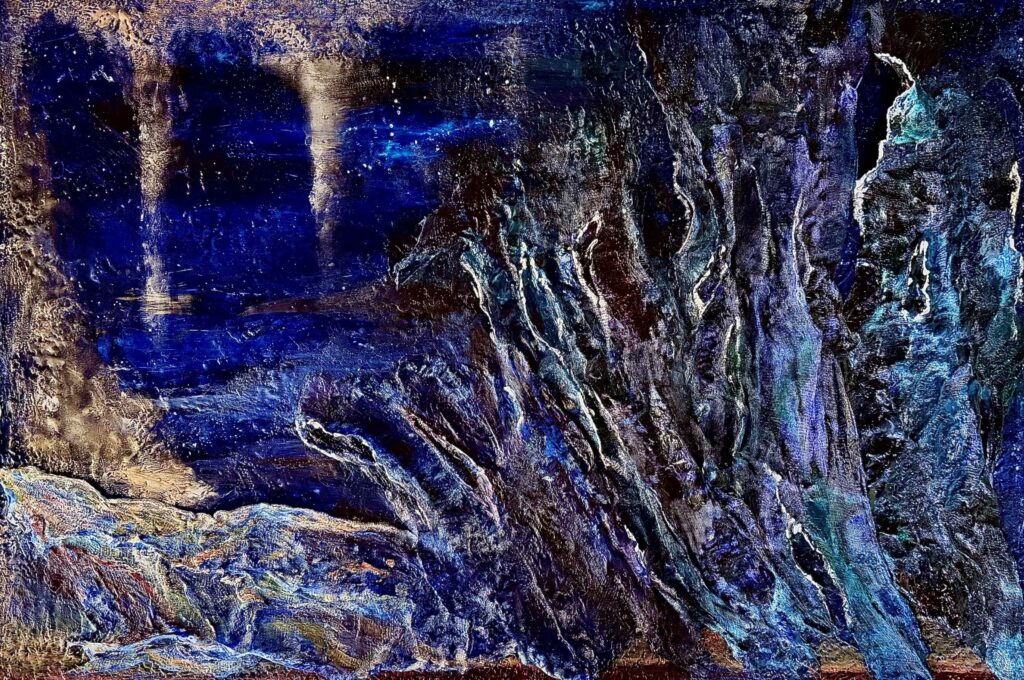
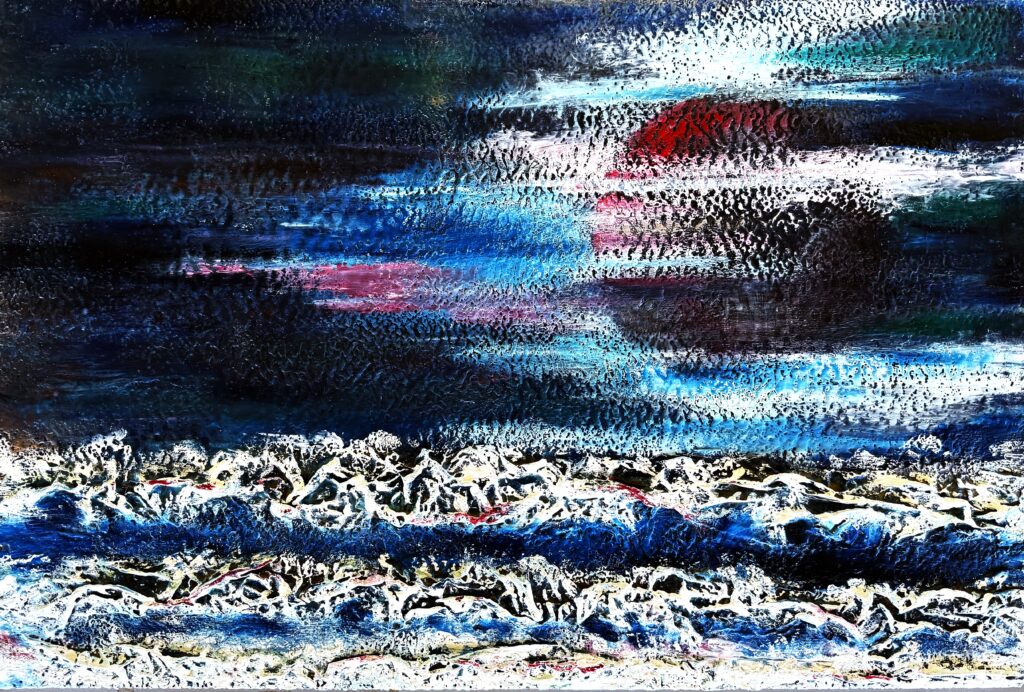
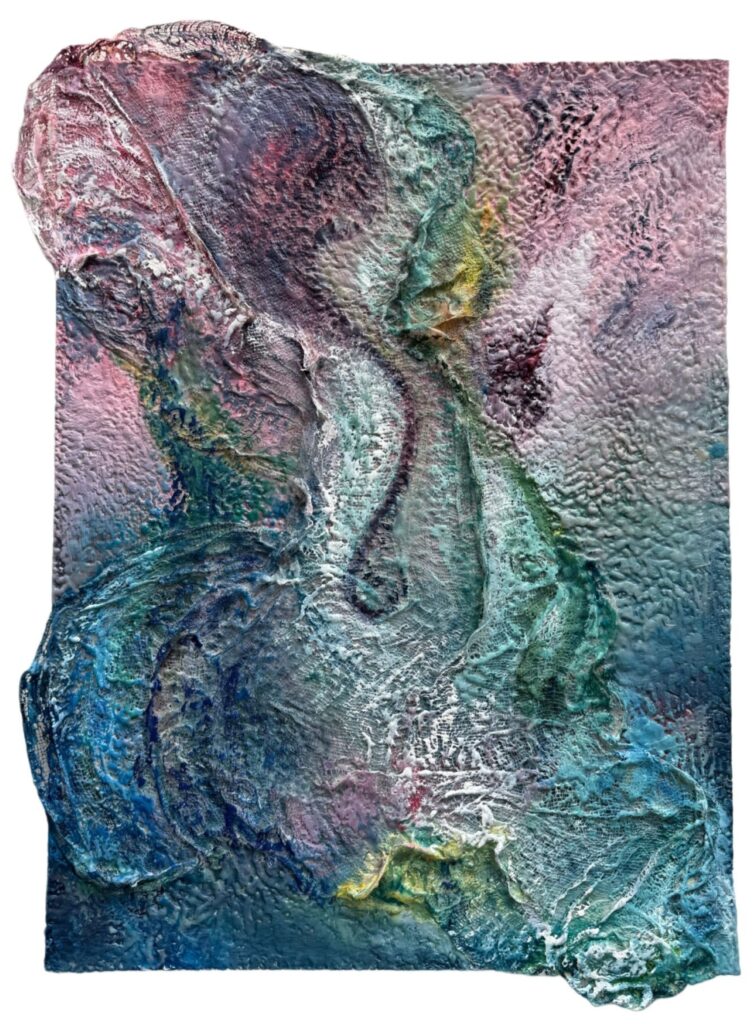
You have to understand: Klesse doesn’t make quiet art. Her voice, and she uses that word deliberately, is rooted in emotional honesty, transformation, and resilience. She works in encaustic and mixed media because wax can hold layers in a way that paint can’t. And she’s interested in what gets buried. The psychological aftermath of trauma. The tension between darkness and illumination. But here’s where she differs from most artists you’ll read about: she adds sound. And scent. And sometimes light that changes over time. “Texture, materiality, sound, light, and atmosphere all play important roles,” she says. She wants the work to be experienced not only visually but also emotionally and physically. Not as a fixed narrative. As an invitation. She’s interested in the fractures left by social and political violence, yes. But also the quieter internal struggles. The ones nobody sees. At its core? Her practice is about transcendence. “Suffering can become a catalyst for awareness, compassion, and transformation. “That’s not a slogan for her. That’s lived.
From Fashion to Fine Art — The Slow Shift
Earlier in her life, creativity looked different. Fashion design. Décor. Handcrafted objects. But over time slowly, almost without her noticing, fine art became the way she processed lived experiences. Deep emotional truths. As her work matured, she found herself drawn to multi-sensory artwork clusters. Visual pieces. Tactile pieces. Clusters. “Encaustic has an ability to physically embody memory,” she says. “Concealment, erosion, and revelation through layers and texture.” Her visual language became more abstract. More symbolic. And then the auditory components and scent notes evolved too. Not because she planned them. She required the items. “What has remained constant,” she says, “is the desire to create work that fosters reflection, connection, and emotional resonance.” She wants to acknowledge pain without surrendering to it. To hold space for complexity. That’s the thread. Everything else has changed.
The Work Is How She Navigates
For Klesse, creativity isn’t a job. It’s a way of moving through intense experiences. And sometimes this is important; it’s a way of letting the analytical part of her mind rest. “The act of making becomes both instinctive and restorative,” she says. “A space where emotion, sensation, memory, and intuition can exist without needing to be immediately explained or resolved. When she chooses to share work publicly, she expands the experience. Companion pieces. Multi-sensory elements. The work requires emotional expression that the artist uses to create her artistic work. She wants viewers to experience the same feelings that she experienced through her complete sensory perception of the creation process. “My hope is to create an atmosphere that envelops the participant both emotionally and through their senses,” she says. “Not through observation alone.” That’s a different kind of art. A different kind of invitation.
The Projects That Hurt the Most
Not every subject matters the same way to Klesse. The projects that hold the deepest meaning are those rooted in social injustice. Especially injustices involving children. Those works carry weight. Ethical weight. Emotional weight. They rise because people feel both witness and obligation. The development of immersive clusters, which she created for her research, serves as her primary research tool for presenting emotional experiences. The works that she created serve as memorial tributes to her. Empathy. Human connection. She hopes people leave feeling emotionally awakened. More willing to engage with experiences that are difficult, uncomfortable, and socially neglected. She wants the work to create space for compassion through all subjects, but especially through painful subjects.
How a Piece Actually Gets Made
Her creative process usually starts one of two ways. Either a specific event or emotional experience she needs to explore. Or a theme proposed by an exhibition or venue. When the work is rooted in strong emotional input, ideas flow intuitively. Less research needed because the emotional core already exists. Other projects require deeper investigation. “I immerse myself in research,” she says. “Gathering historical, psychological, sensory, and symbolic references until the overall mood begins to coalesce. ” From there? It varies. Sometimes she sees the final work almost immediately. Other times she begins with only an atmosphere or emotional tone and lets the piece reveal itself through experimentation and layering. Some works come together within a week or two. Others evolve over many months. She currently has a piece that has been developing internally for nearly a year. She has no idea what it will become. “I have learned to respect that unpredictability,” she says. “Not resist it.”
The Discipline Nobody Talks About
For all the emotional depth, Klesse’s practice runs on routine. After her morning jog, she handles the practical stuff. Art-related emails. Marketing tasks. Calendars and inventory. Supplies. Exhibitions. Deliveries. Some days the administrative side takes most of the morning before she even touches wax or pigment. Twice a month, she meets with other artists. They exchange ideas. They critique each other’s work. “Consistency comes from treating art as both a vocation and a disciplined daily practice,” she says. Her backgrounds in philosophy, mental and physical trauma nursing, management, and marketing—all of that feeds into how she approaches both the conceptual and practical sides. “One of the greatest misunderstandings about the creative journey is the belief that artists only need to create exceptional work to succeed. “She pauses.” Creating meaningful work is only one part. The other part nobody tells you about is that.”
Authenticity or Nothing
What guides her work? Authenticity. Emotional honesty. Empathy. Meaningful communication. She believes that when artists work from genuine emotional experience, the resulting work displays originality and deep artistic value, which cannot be created through artificial means. She states that “when work is disconnected from authentic emotion or personal truth,” she says audiences can sense that absence. Even if technically accomplished, the work can feel soulless. “This is especially true for multi-sensory work. She can tell when sensory elements are added superficially versus emerging organically. In her work, the sensory components are not decorative. They are part of a unified emotional language. She developed this philosophy through an unexpected door: directing a student art exhibition that included artists on the autism spectrum. Some students struggled with traditional verbal artist statements. So she helped them express meaning through sensory cues instead. That experience stayed with her. It became a larger philosophy. Communication through the senses. But only when it comes from real lived experience.
Advice for the Artist Who Thinks Everything Has Been Done
What does Klesse see coming? She believes the creative industry will keep moving toward deeper personal expression. Interdisciplinary practice. Immersive communication. “Every generation of artists begins with the feeling that ‘everything has already been done,'” she says. “Yet art continually evolves because no two people experience the world in exactly the same way.” Her advice for emerging artists? Spend less time worrying about originality in the conventional sense. Spend more time understanding your own emotional truth. Your own lived experience. The artist explains that unique artistic work develops through genuine expression of one’s authentic self. She states that the strongest artistic work emerges from artists who boldly investigate their personal emotional experiences. “She warns against imitation. Against chasing what’s currently successful or accepted. Technical skill matters, yes. But emotional clarity and authenticity? That’s what allows work to resonate deeply with others.
The Language Nobody Taught Her
M. E. Klesse didn’t plan any of this. She didn’t wake up one day and decide to become an encaustic artist who uses sound and scent to talk about trauma. She just kept going. After the loss. After the relocation. After all the small deaths and smaller resurrections. Art became the only language left. Not because it was easy. Because it was honest. Her work reminds us that art can be more than decoration. It can be a way of holding what’s broken without rushing to fix it. A way of saying, “I was here.” This is what I felt. You are not alone in feeling it too. In a world that wants everything fast and clear and resolved, Klesse offers the opposite. Layers. Atmosphere. A scent in the air. A sound just beneath hearing. She offers permission to sit with complexity. And in doing so, she does not just create art. She creates a world where even the quietest, most fractured voices finally have somewhere to go.
Digital Magazine: The Most Artistic Voice Redefining Creative Arts in 2026