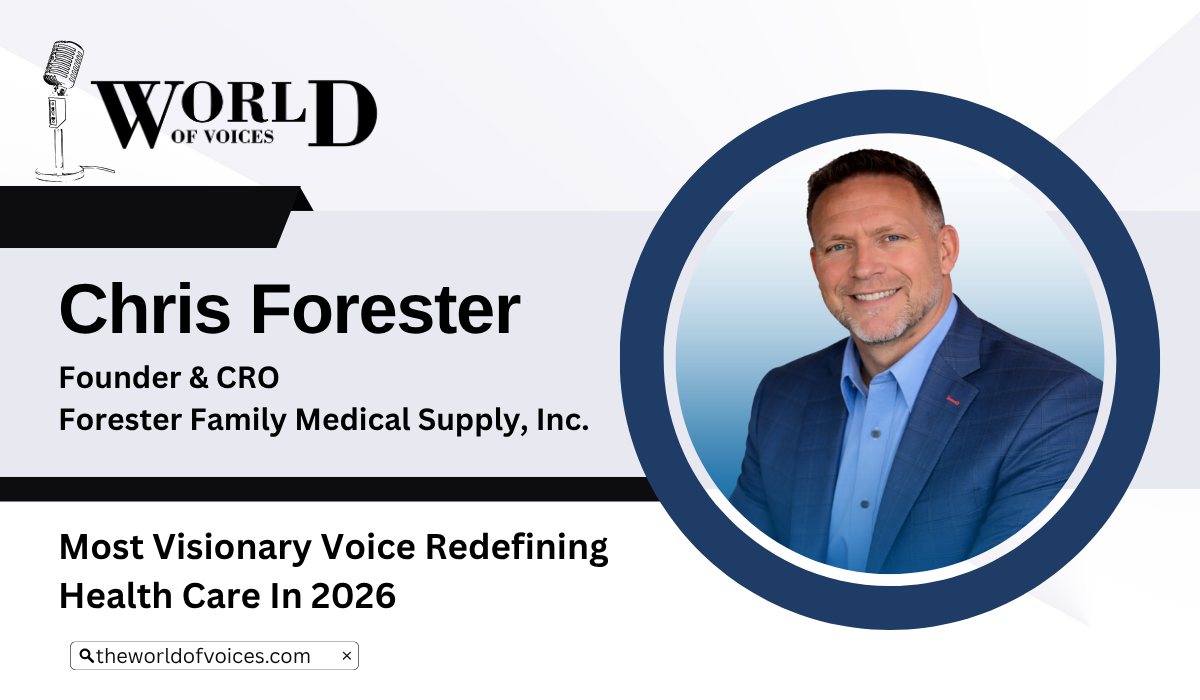
“Healthcare is not just about products, services, or systems. It is about people. It is about a family trying to bring a loved one home safely. It is about a patient trying to regain independence. It is about dignity.”
Some leaders measure success in quarterly earnings or market share, sure. But for Chris Forester, co-founder of Forester Family Medical Supply, success feels… different. It feels like a daughter finally able to sleep at night, knowing her aging father has the right mobility aid. It feels like a young athlete stepping onto the basketball court with real confidence. It feels like a family business where the owners answer the phone and the patients are never reduced to numbers, or whatever you want to call it.
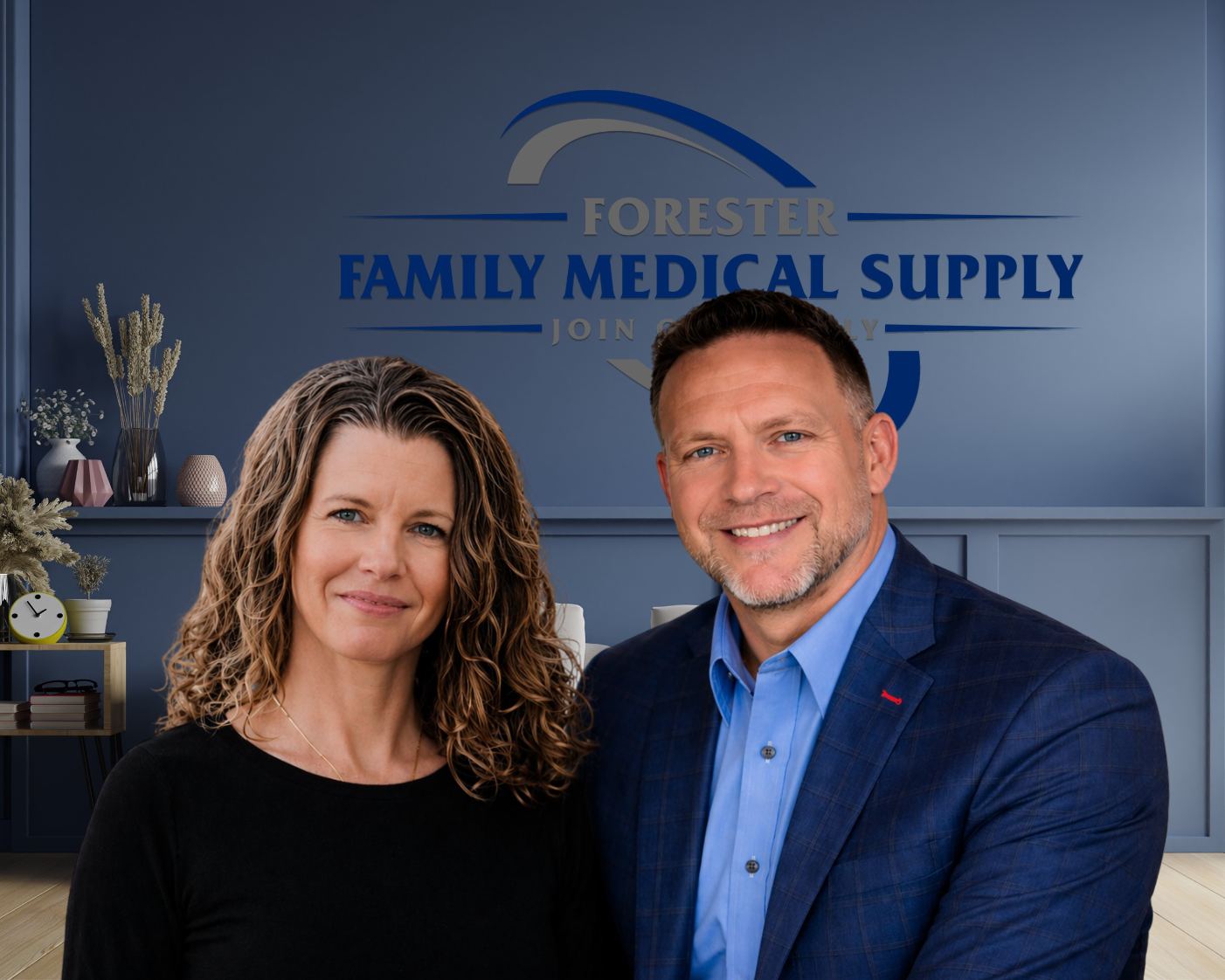
In an era where healthcare often seems more and more impersonal, pushed along by algorithms and automated phone trees, Chris Forester is making this quiet but strong kind of stand. His vision is almost simple, in a way that’s kind of rare: make healthcare feel human again. And he isn’t doing it from some glass walled corporate tower, but from the middle of the community, building a legacy of service with his wife, Stacy, and their two sons Tyler and Brady.
This is the story of a man who thinks the most forward-looking thing you can do in healthcare today is to care. Not just strategically—but genuinely, like, on purpose. Through the family business and the nonprofit Wildcats Basketball Club, Chris is reshaping what it means to be a healthcare leader in 2026 grounded in compassion , driven by integrity, and focused on the person, not the transaction.
About Chris & His Journey: Where Service Began
Chris Forester’s journey into healthcare didn’t really start with some big business plan or a degree in administration. It started with something much simpler, yet also more deep, like watching people in vulnerable moments and then feeling this undeniable pull to make those moments a little easier, somehow.
“My wife, Stacy, and I co-founded Forester Family Medical Supply with that heart,” Chris says. “It’s a family business built for the community , and it carries our family name with pride and responsibility.” And he feels that responsibility every day. You can see it in how he listens to a caregiver who is tired, scattered, and confused. You can also hear it in the extra five minutes he takes so a patient actually understands how to use a piece of equipment safely. For Chris, this isn’t just good business, it’s personal.
The family part isn’t negotiable at all. Tyler and Brady aren’t only sons, they’re part of the reason Chris and Stacy are building something that will keep going after them. “We want them to see that success is not only measured by growth, but by service.” He teaches that lesson less like a lecture and more like a living example. Day to day, the Forester family shows that a business can be profitable and principled at the same time, successful and serving… not one or the other.
And Chris Forester’s commitment doesn’t stop at medical supplies. Along with Stacy, he co-founded the Wildcats Basketball Club, a nonprofit built to help young athletes build confidence, discipline, and teamwork. “Whether we are helping a patient get the right medical supplies or helping young athletes grow in confidence, discipline, and teamwork, the mission stays the same: lift people up and help them move forward.” So yeah, this blend of healthcare and youth development, it basically reveals the core of Chris’s thinking. Service isn’t a side section of life, it’s the whole picture.
Vision & Purpose: Making Healthcare More Human
Ask Chris Forester about his mission today, and he won’t fall back on jargon or any of that. He talks like it’s just… real, and understandable, with clear compassionate words. “My mission is to make healthcare feel more human, more accessible, and more trustworthy.” For Forester Family Medical Supply, that basically means being a steady, dependable resource that families can count on when they are at their most vulnerable , and when things feel a bit overwhelming too.
So what keeps pushing him forward , keeps him innovating? He’ll tell you it’s never the technology by itself. “The people motivate me. Every patient, every caregiver, every family member who is doing their best in a difficult situation reminds me why innovation matters.” For Chris, innovation isn’t about chasing the newest thing, or acting like the next tool is the goal. It’s more like asking sharper , more empathetic questions , like: *How can we make this easier for the patient? How can we reduce stress for the caregiver? How can we deliver faster, communicate better, and serve with more consistency?*
There’s also a realization that he says shaped the long view. Healthcare, in his mind, doesn’t really end when someone leaves the doctor’s office. “In many ways , that is where the next part of the journey begins. People go home and still need support. They need supplies. They need guidance. They need reassurance. They need someone who will answer the phone and treat their concern like it matters.” That idea is at the heart of Forester Family Medical Supply. The company lives in that important space between medical care and everyday life, you know, in between places where trust, service, and compassion can create something lasting, tangible , and real for people.
Leadership & Impact: Practical Compassion in Action
In a healthcare environment that is always shifting, Chris Forester sort of defines visionary leadership with a rare balance of foresight and humility. “Visionary leadership in healthcare means being able to look ahead, without losing sight of the person standing in front of you.” He calls his way of working “practical compassion.” Kinda basically it is the skill to accept technology and new systems,while never letting them replace the real human bond.
So, what qualities does he think healthcare leaders need in 2026 and beyond? “Empathy, adaptability, integrity, and courage.” Then, he adds something that gets missed a lot: humility. “Healthcare is too important for ego. The best leaders are lifelong learners. They are ready to grow, ready to admit when something could be better, and they are ready to surround themselves with good people.”
He says this humility is what lifts his teams during change, and also during those uneasy moments. “I try to remind people that our work has a purpose beyond the job right in front of us. Every phone call, every delivery, every patient interaction has the potential to bring comfort to someone’s life.” He also makes a comparison to coaching young athletes at Wildcats Basketball Club: “When people understand their role, trust their teammates, and buy into the mission, they can push through the hard times. Leadership is about keeping that conviction alive.”
Innovation & Transformation: Supporting the Relationship
Chris Forester has watched innovation, kind of slowly change the healthcare landscape over time, and now more organizations feel more connected and also more data-driven. He sees a lot of promise in digital tools, and in AI too, and he often brings up the big strategic themes in Deloitte’s 2026 U.S. Health Care Outlook, like care delivery transformation, plus digital experiences. Still, he’s not naive about it. “The best innovation makes care feel easier, not colder.”
Sure, putting new ideas into practice comes with real friction. “One of the biggest challenges is making sure change does not overwhelm the people it is supposed to help.” There can be resistance, and Chris Forester thinks that’s normal, honestly. His way is less about rushing through steps, and more about explaining why it matters. “As a leader, I believe it is important to explain the purpose behind the change, not just the process.”
For Chris Forester, the balance between technology, efficiency, and patient centered care is pretty straightforward. Technology should support the relationship, not replace it. “Efficiency is important because it helps us respond faster, reduce errors, and serve more people well.” But patient centered care needs more than speed, it needs listening and attention. If a new tool doesn’t help the team provide more consistent support or make communication clearer, then it doesn’t belong. “The heart of care will always be human,” he insists, and “Patients remember how you made them feel.”
People, Culture & Values: The Forester Family Standard
The values that guide Chris Forester are not just words on a website. They are the standards by which he lives and leads. “Family, service, integrity, compassion, accountability, and community.” These are the pillars of Forester Family Medical Supply and the Wildcats Basketball Club.
Building trust, he explains, is a product of consistency. “You build trust by showing up, listening, telling the truth, and doing what you said you were going to do.” With his team, trust comes from respect. With the community, trust comes from being present. “You cannot say you care about the community and then disappear when people need you.” The two organizations Stacy and Chris Forester lead allow them to serve in different but connected ways—one through healthcare, the other through mentorship and sports—but both are built on the same foundation of trust.
Empathy, Chris Forester says, is not a soft skill. It is one of the most important qualities in healthcare leadership. “It allows you to see beyond the transaction and understand the emotion behind the need.” A family calling for supplies may be scared or overwhelmed. A caregiver may be at their breaking point. “Empathy helps us respond with patience and respect. I do not see empathy as weakness. I see it as strength.”
Future of Healthcare: Smarter and Kinder
Looking ahead, Chris Forester sees a few big trends that are already shaping the industry, care moving closer to the home, stronger digital tools, workforce challenges, and a deeper focus on the patient experience. He admits the workforce shortages, and the rural needs that came up in the American Hospital Association’s 2026 workforce scan. He also understands that interoperability matters a lot, saying that “patients should not have to carry the burden of disconnected systems.”
But really, his personal focus stays right where technology meets humanity. The organizations that succeed will probably be the ones that mix up innovation with compassion, in a kind of steady way. He is especially focused on telehealth, remote monitoring, and AI supported tools that can help make healthcare more accessible, especially for folks dealing with distance or limited mobility, in practical terms.Still, he repeats the World Health Organization’s caution that digital health should support universal access , and not end up as another engine of inequity.
What excites him most though, is the possibility of bringing better support right into the home and the community. “So much of a person’s health journey happens outside a medical facility. Families need resources, education, supplies, and encouragement in real life. not just during appointments.” That idea, of better coordination and more personal support, is what keeps him moving. “The future of healthcare gives us a chance to build systems that are not only smarter, but kinder.”
An Open Letter to Tomorrow’s Healthcare Leaders
Dear Future Leaders,
Don’t let ambition get ahead of compassion, not like really. Growth matters, and innovation matters too, but when it comes to healthcare people still come first.
Spend some time listening to patients, caregivers, employees, and communities. Honestly the best ideas usually show up from the people right next to the need , you know close up. Don’t lead from a distance. Get close enough, just close enough to understand what people are actually experiencing.
Build with integrity. Your reputation isn’t made in big moments only , it’s made in the small stuff. Answer the call, keep your word. Treat folks right and use technology wisely , but don’t lose the human touch, ever.
Healthcare needs leaders who are smart enough to innovate and humble enough to care.
With purpose,
Chris Forester
Advice & Legacy: One Person, One Moment at a Time
When Chris Forester talks about his journey, he kinda shares the key lessons he learned along the way. “People remember how you treat them. They might forget the tiny details of a conversation, but they still recall whether they felt respected, rushed, brushed aside, or simply cared for.” And he also figured out that leadership isn’t about owning every single answer, it’s more like staying open to learning, being ready to listen, and taking responsibility, you know.
But honestly the biggest takeaway for him is that building anything meaningful really takes patience. “A legacy gets built one person, one family, and one moment at a time.”
So what legacy is he hoping to leave? “I hope my legacy is that people felt cared for. I hope families remember Forester Family Medical Supply as a place where they were treated with dignity, with patience, and with respect.” He wants his sons, Tyler and Brady, to look back later and feel proud— not only because their parents built a business, but because they built it for the right reasons. “Service matters. Community matters. Honestly, how you treat people matters.”
And through Wildcats Basketball Club, he hopes that legacy keeps spreading, reaching young people who need encouragement to believe in themselves, gain discipline, and really understand teamwork.”
3 Guiding Principles That Inspire Chris Forester’s Journey
1. “Serve the person, not the transaction.” Every patient, caregiver, athlete, parent, and family has a story. When you remember the person behind the need, your work becomes more meaningful.
2. “Build with family, lead for community.” Build something that strengthens the community and reflects the values you live by at home. Let your family name be a promise of quality and care.
3. “Never let progress lose its heart.” Healthcare will continue to change. Technology will advance. Systems will evolve. But compassion, trust, and human connection must remain at the center. That is the kind of healthcare future worth building.
Chris Forester’s Impact at a Glance
– Co-Founder: Forester Family Medical Supply (with Stacy Forester)
– Co-Founder: Wildcats Basketball Club (nonprofit) (with Stacy Forester)
– Family-Centered Leadership: Building a legacy with sons Tyler and Brady
– Core Mission: Making healthcare feel more human, accessible, and trustworthy
– Community Focus: Serving families through medical supplies and youth mentorship
– Leadership Philosophy: Practical compassion—innovation with heart
– Future Vision: Smarter, kinder healthcare systems that support the whole person
“Healthcare will continue to change. Technology will advance. Systems will evolve. But compassion, trust, and human connection must remain at the center. That is the kind of healthcare future I believe in.” – Chris Forester
Digital Magazine: Most Visionary Voice Redefining Health Care In 2026